


Published in:

Berlin’s largest subscription daily newspaper
3 pages | text & photography
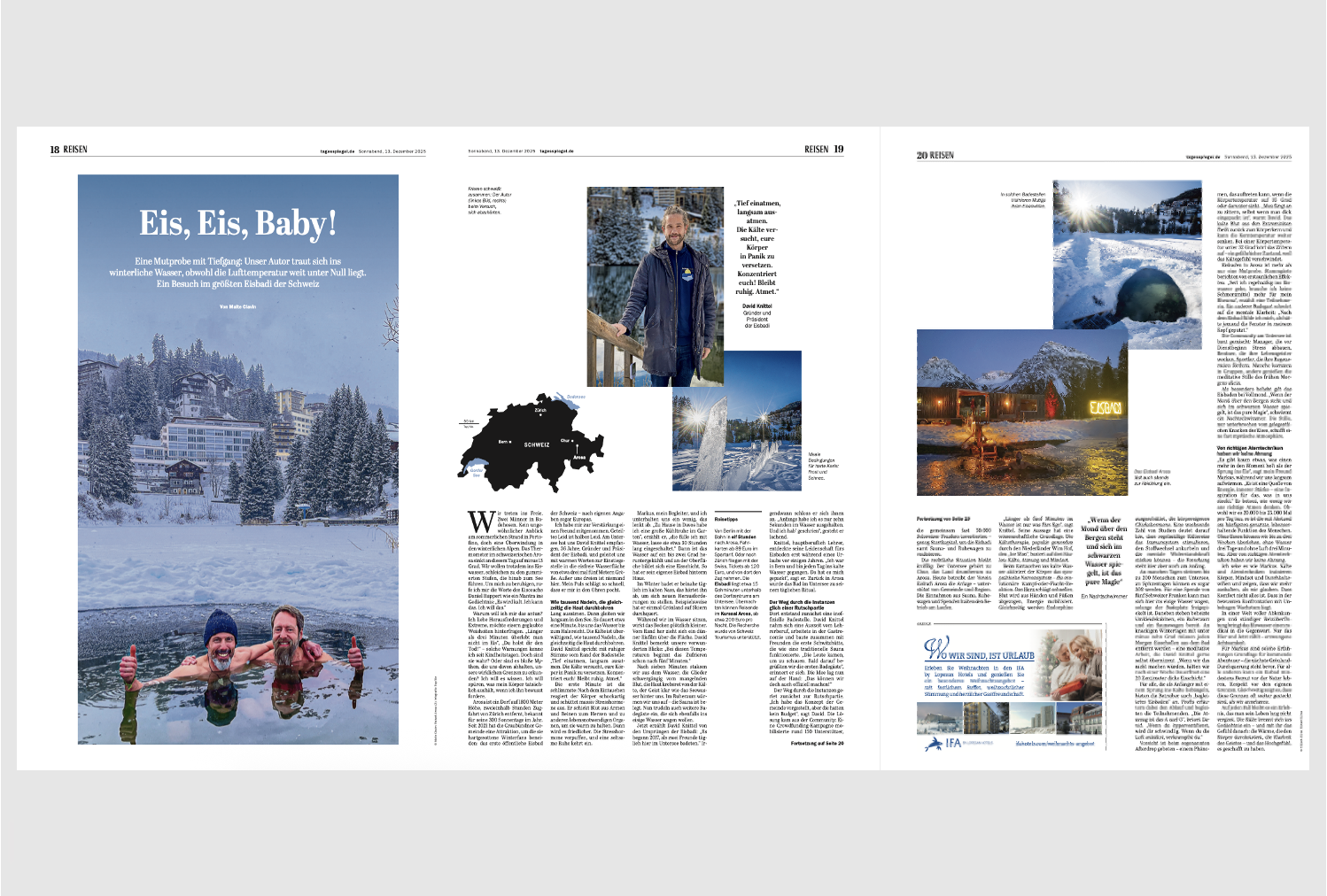
We step outside. Two men in swimming trunks. Not an unusual sight on the summer beach in Portofino, but a challenge in the winter Alps. The thermometer in Arosa, Switzerland, drops to minus 13 degrees on this day. Nevertheless, we want to get into the ice water and sneak down the rubberised steps leading down to the lake. To calm myself, I repeat the words of ice coach Daniel Ruppert like a mantra:
“It’s going to be cold. I can do this. I want to do this.”
“You won’t survive longer than three minutes in the ice” – is that true?
Why do I want to do this to myself?
I love challenges and extremes, I want to question firmly held beliefs. “You won’t survive longer than three minutes in the ice,” “You’ll kill yourself!” – I’ve heard warnings like these since childhood. But are they true? Or are they mere myths that prevent us from exploring our real limits? I want to find out. I want to feel what my body can actually endure when I consciously push it to its limits.
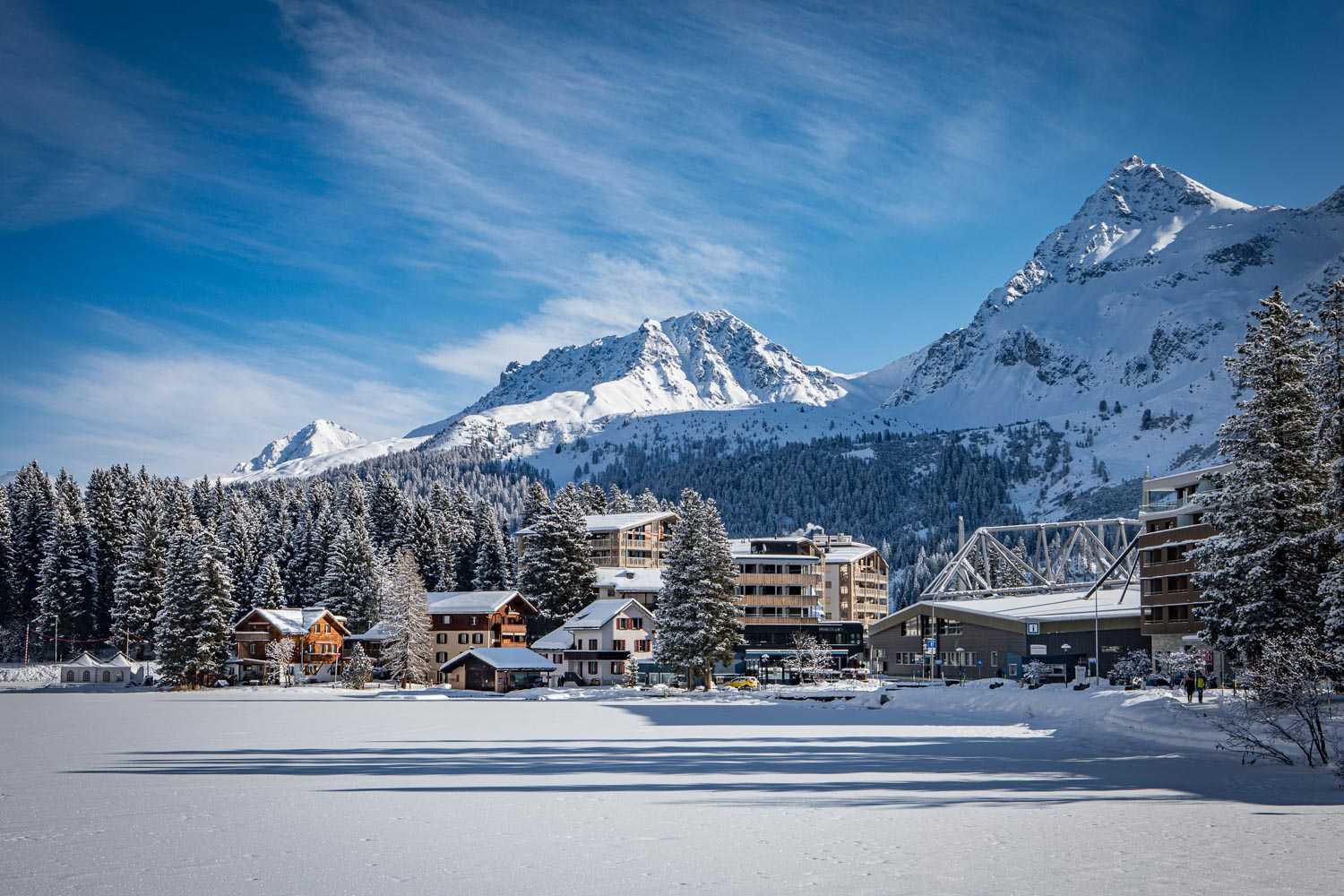
Arosa, wonderfully embedded in a Swiss winter landscape of snow-covered mountains and a frozen lake.
Arosa is a village at an altitude of 1,800 metres, two and a half hours by train from Zurich, known for its 300 days of sunshine a year. Since 2021, the Graubünden municipality has had an attraction that hardened winter fans envy: Switzerland’s first public ice bath – according to its own claims, even Europe’s first.
I brought a friend along for support. A problem shared is a problem halved. At Untersee, we were greeted by David Knittel , 36, founder and president of Eisbadi, who guided us with warm words to the entry point in the ice-free water area measuring approximately three by five metres. Apart from the three of us, there is no one else here. My pulse is beating so fast that it’s pounding in my ears.
“The cold is trying to make your bodies panic.”
Like a thousand needles piercing my skin at once
Exhale slowly. Then we slowly slide into the lake. It takes about a minute for the water to reach our necks. The cold is overwhelming, like a thousand needles piercing the skin at once. David Knittel speaks in a calm voice from the edge of the bathing area:
“Breathe in deeply, breathe out slowly. The cold is trying to make your bodies panic. Concentrate! Stay calm. Breathe.”
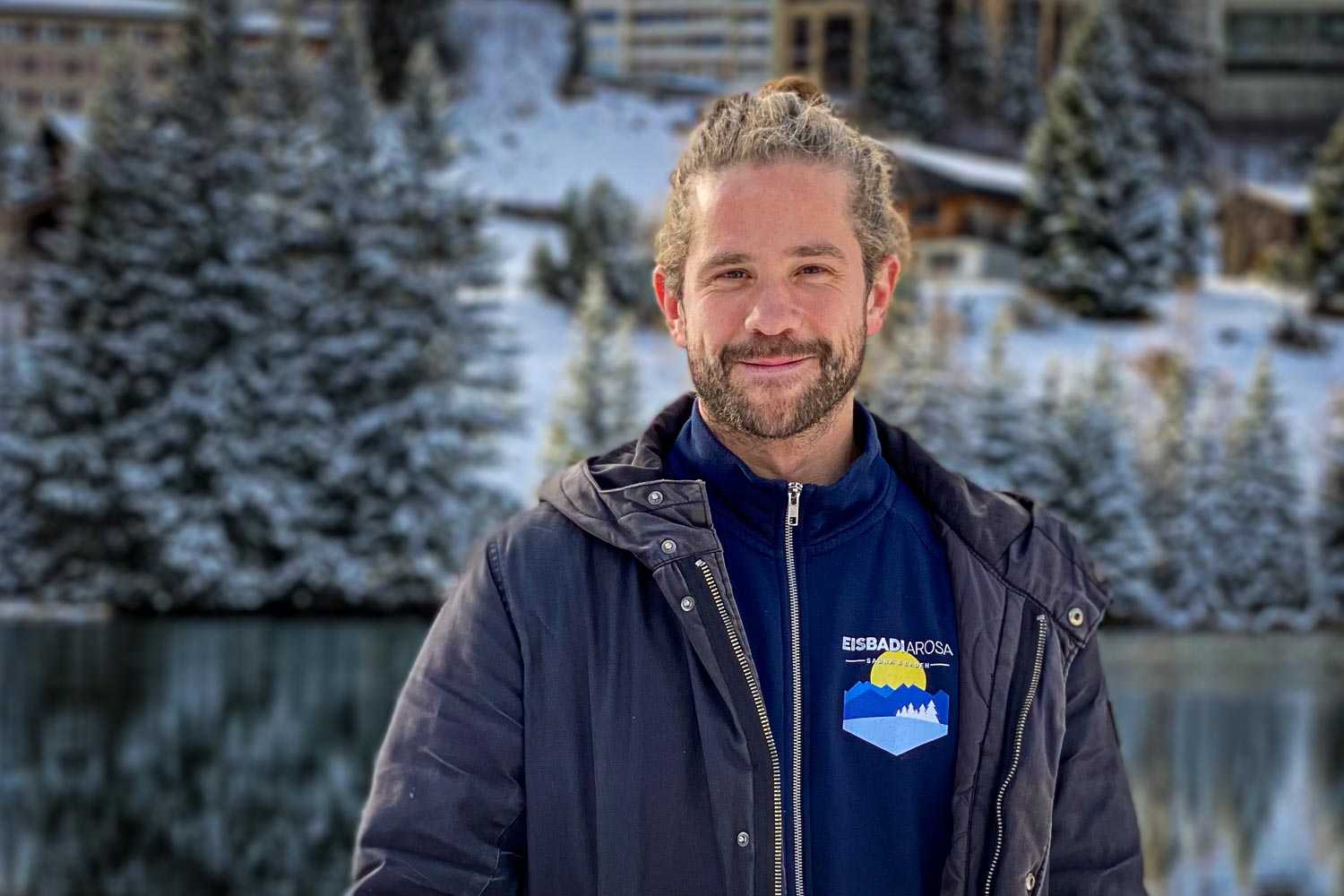
David Knittel, founder, ice bathing guide and president of the Eisbadi association (photo by Eisbadi Arosa).
The first minute is the worst. After immersion, the body reacts with shock and releases massive amounts of stress hormones. It sends blood from the arms and legs to the heart and other vital organs to keep them warm. Then it becomes more peaceful. The stress hormones dissipate and a strange calmness sets in.
“At home in Davos, I have a large freezer in the garden.”
Markus, my companion, and I chat a little, which distracts us.
“At home in Davos, I have a large freezer in the garden,” he says, “which I fill with water and leave on for about 30 hours.”
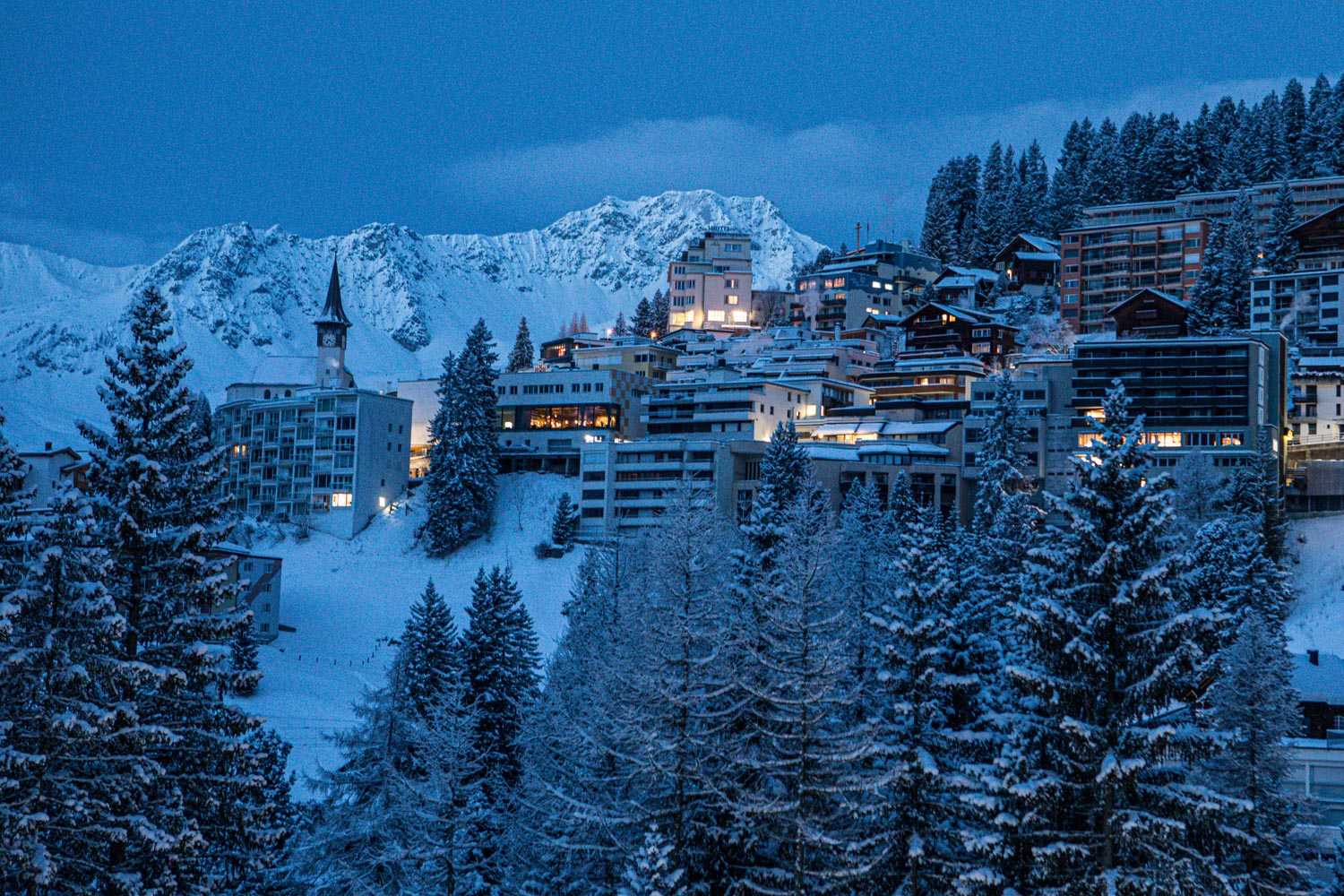
Wonderful light atmosphere in Arosa before evening.
By then, the water has cooled down to one or two degrees, and a layer of ice forms on the surface. This gives him his own ice bath behind the house. In winter, he bathes in the cold water almost every day, which toughens him up to face new challenges. For example, he once crossed Greenland on skis.
Our limbs stiff from the lack of blood
As we sit in the water, the pool suddenly seems smaller. A thin film of ice spreads across the surface from the edge. David Knittel notices our surprised looks:
“At these temperatures, it starts to freeze after just five minutes.”
After seven minutes, we stumble out of the water, our limbs stiff from the lack of blood, our skin bright red from the cold, our minds as clear as the lake water behind us. We warm up in the relaxation room – the sauna is occupied. Now other bathers are arriving, who also want to venture into the icy water.
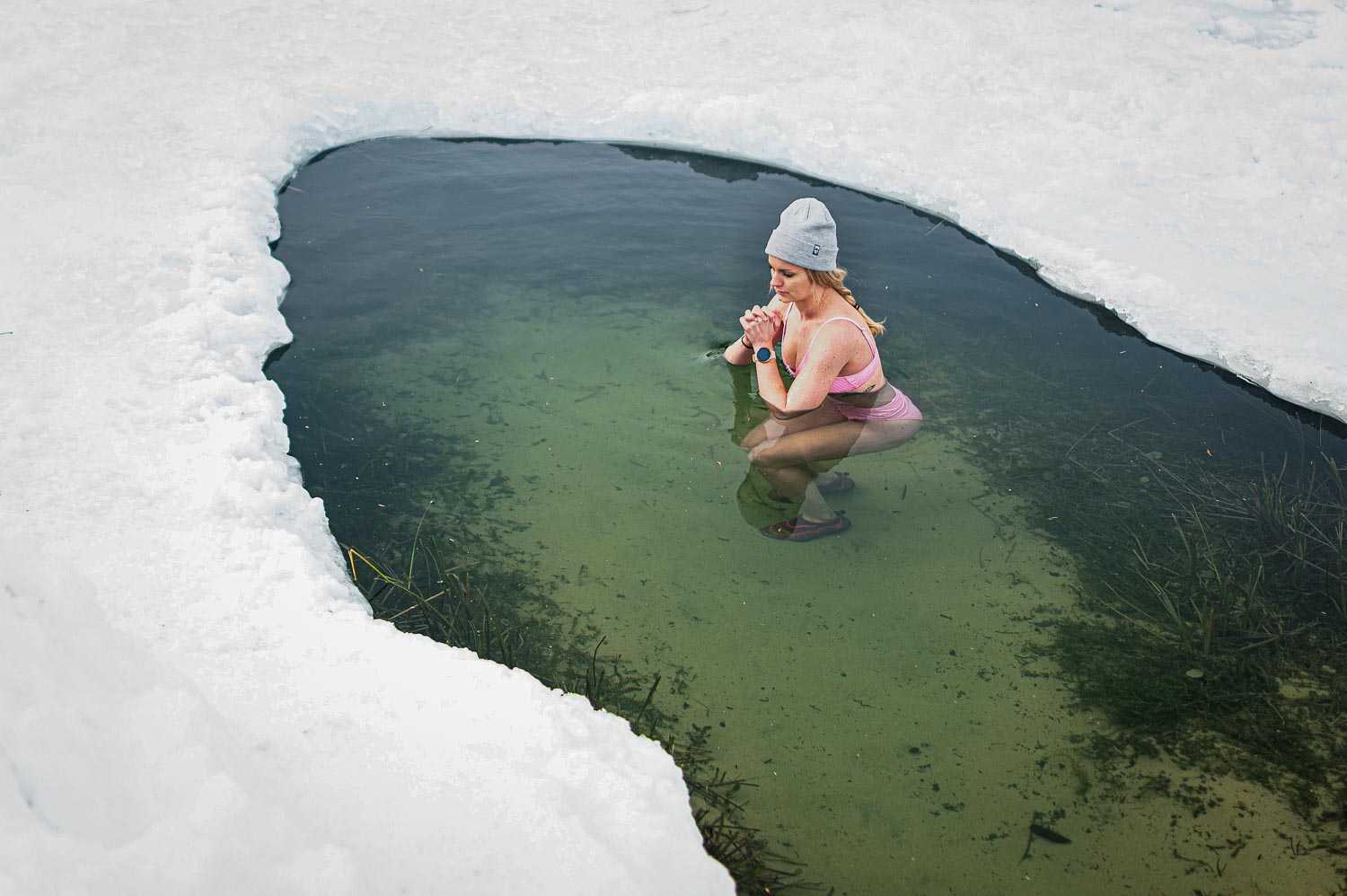
The Eisbadi Arosa in the Untersee (photo by Eisbadi Arosa).
The path trough the authorities was like a slippery slope
David Knittel now tells us about the origins of ice bathing:
“It started in 2017, when two friends bathed here in Untersee every day.”
At some point, he joined them.
“At first, I could only stand it in the water for ten seconds. And I screamed,” he admits with a laugh.
“I went into the cold water every day. That’s when it grabbed me.”
Knittel, a teacher by profession, only discovered his passion for ice bathing during a holiday a few years ago.
“I was in Bern and went into the cold water every day. That’s when it grabbed me.”
Back in Arosa, bathing in the Untersee became his daily ritual. At first, an unofficial bathing spot was created there. Knittel took a break from teaching, worked in the catering industry and, together with friends, built the first sweat lodge, which functioned like a traditional sauna.
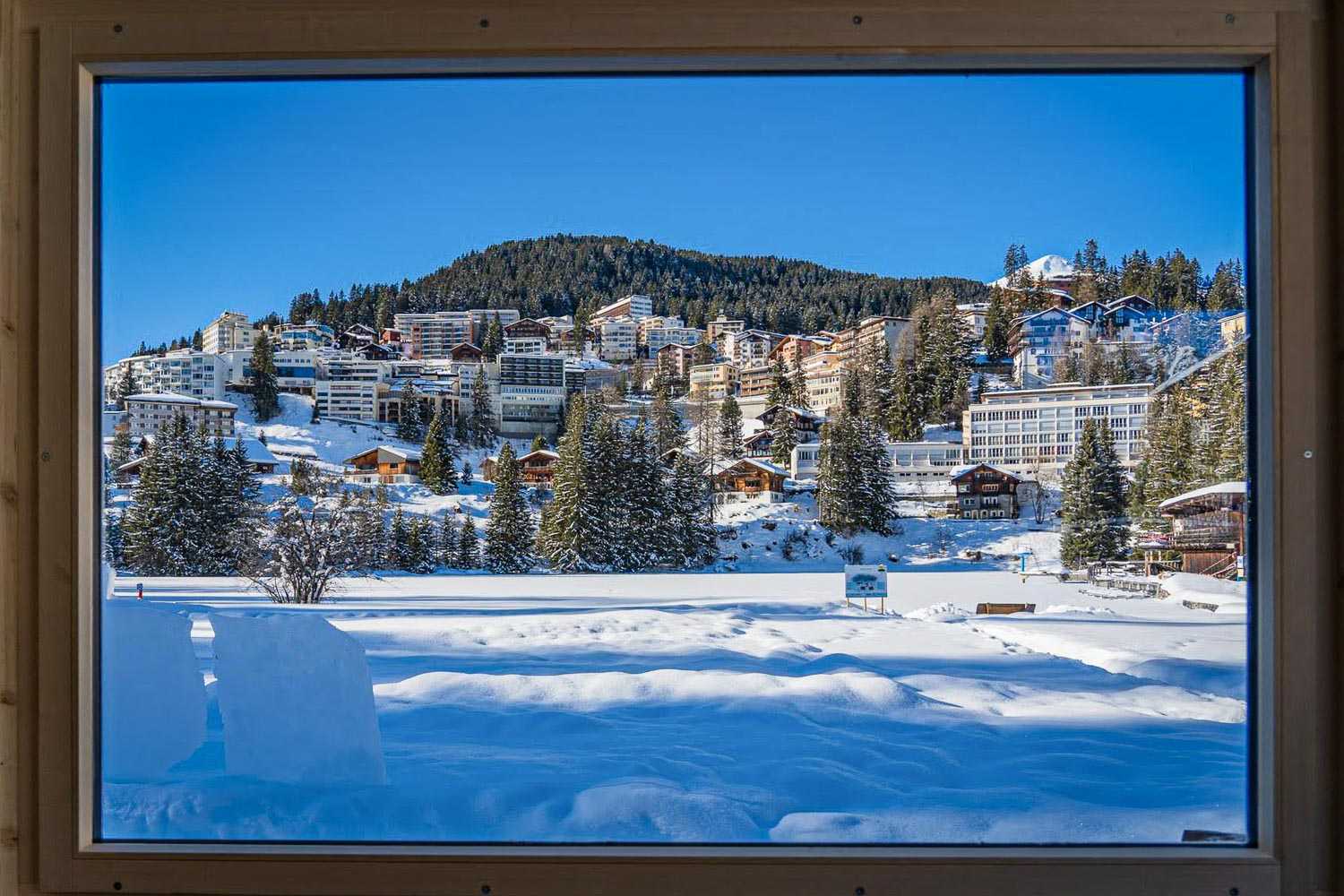
View of Untersee and Arosa from the sauna (photo by Eisbadi Arosa).
“People came to have a look. Soon after, we welcomed our first bathers.”
The idea was now obvious:
“We can make this official!”
The path through the authorities initially turned into a slippery slope.
“I presented the concept to the local council, but they didn’t have the budget.”
150 supporters invested almost 50,000 Swiss francs
The solution came from the community: a crowdfunding campaign mobilised around 150 supporters, who together invested almost 50,000 Swiss francs – enough start-up capital to realise the ice bath, sauna and relaxation wagon.
The legal situation remains tricky. The Untersee belongs to Chur, while the surrounding land belongs to Arosa. Today, the Eisbadi Arosa association operates the facility – supported by the municipality and the region. The income from the sauna, relaxation wagon and donations keeps the business running.
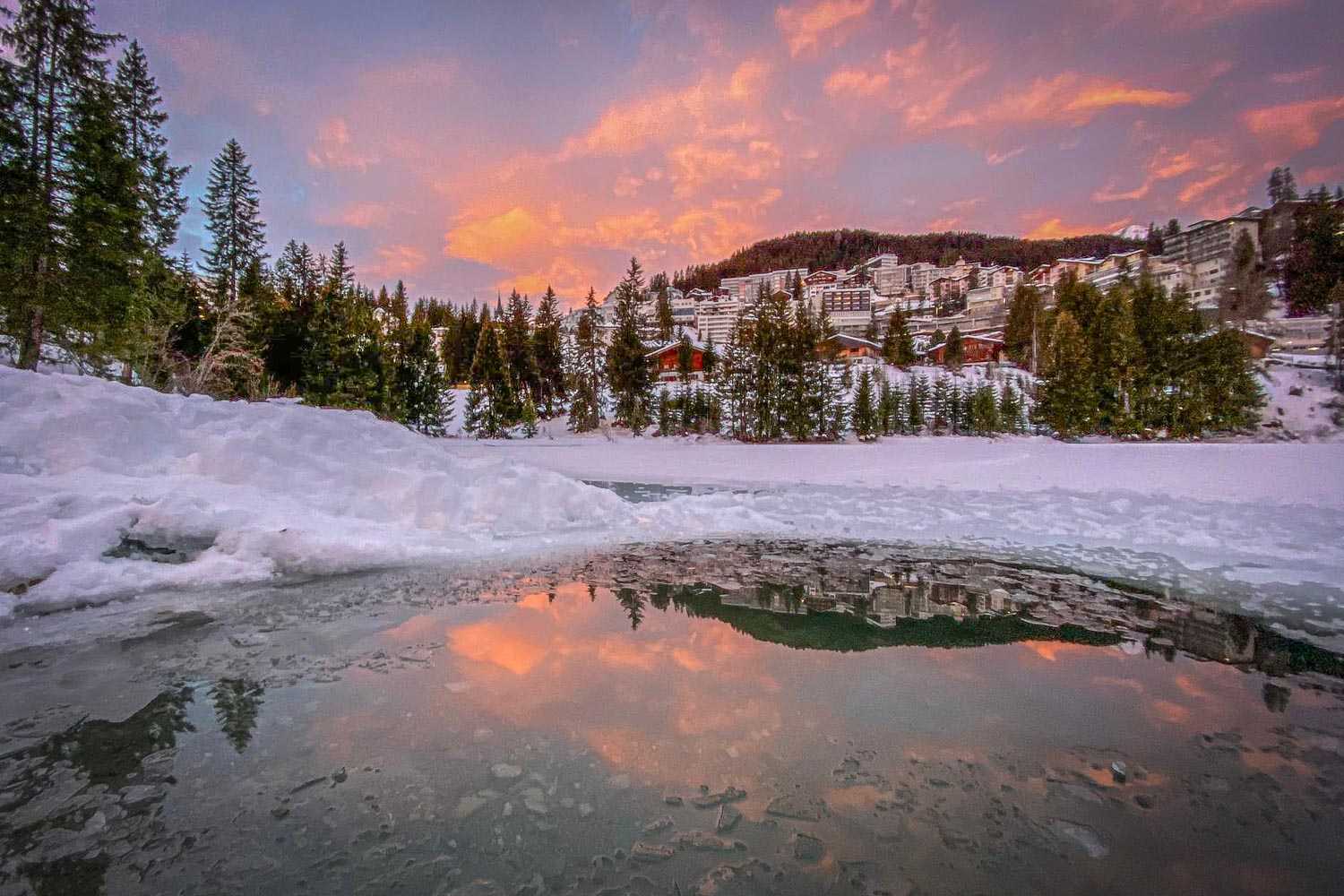
The ice bath in the rising sun of Arosa (photo by Eisbadi Arosa).
Science, cold und control
“Staying in the water for longer than five minutes is just for the ego,” says Knittel.
His statement has a scientific basis. Cold therapy, made popular by Dutchman Wim Hof, the “Ice Man”, is based on three pillars: cold, breathing and mindset.
When immersed in cold water, the body activates the sympathetic nervous system
When immersed in cold water, the body activates the sympathetic nervous system – the evolutionary fight-or-flight response. The heart beats faster, blood is drawn from the hands and feet, and energy is mobilised. At the same time, endorphins, the body’s own happiness hormones, are released. A growing number of studies suggest that regular cold stimuli can stimulate the immune system, boost metabolism and strengthen mental resilience – but research is still in its infancy.
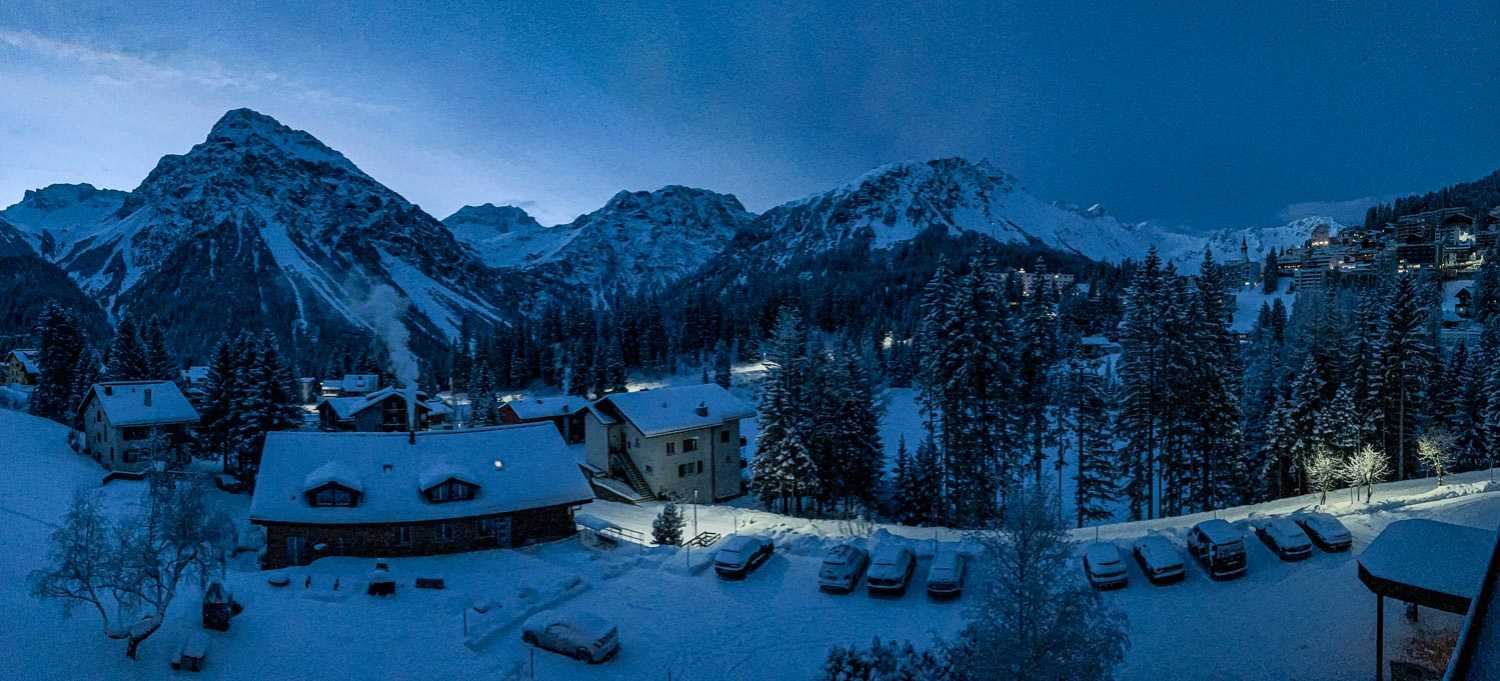
Wonderful light atmosphere in Arosa before evening.
Afterdrop and other risks
Caution is advised with regard to the so-called afterdrop – a phenomenon that can occur when the body temperature drops to 35 degrees or below.
“You start to shiver, even if you’re wrapped up warm,” warns David.
The cold blood from the extremities flows back to the core of the body and can further lower the core temperature. When the body temperature drops below 32 degrees, the shivering stops – a dangerous condition because the feeling of cold disappears.
Ice bathing in Arosa is more than just a test of courage
Community, clarity and magic
Ice bathing in Arosa is more than just a test of courage. Regulars report amazing effects.
“Since I started going into the ice water regularly, I no longer need painkillers for my rheumatism,” says one participant.
Another bather swears by the mental clarity:
“After the ice bath, I feel as if someone has cleaned the windows in my head.”
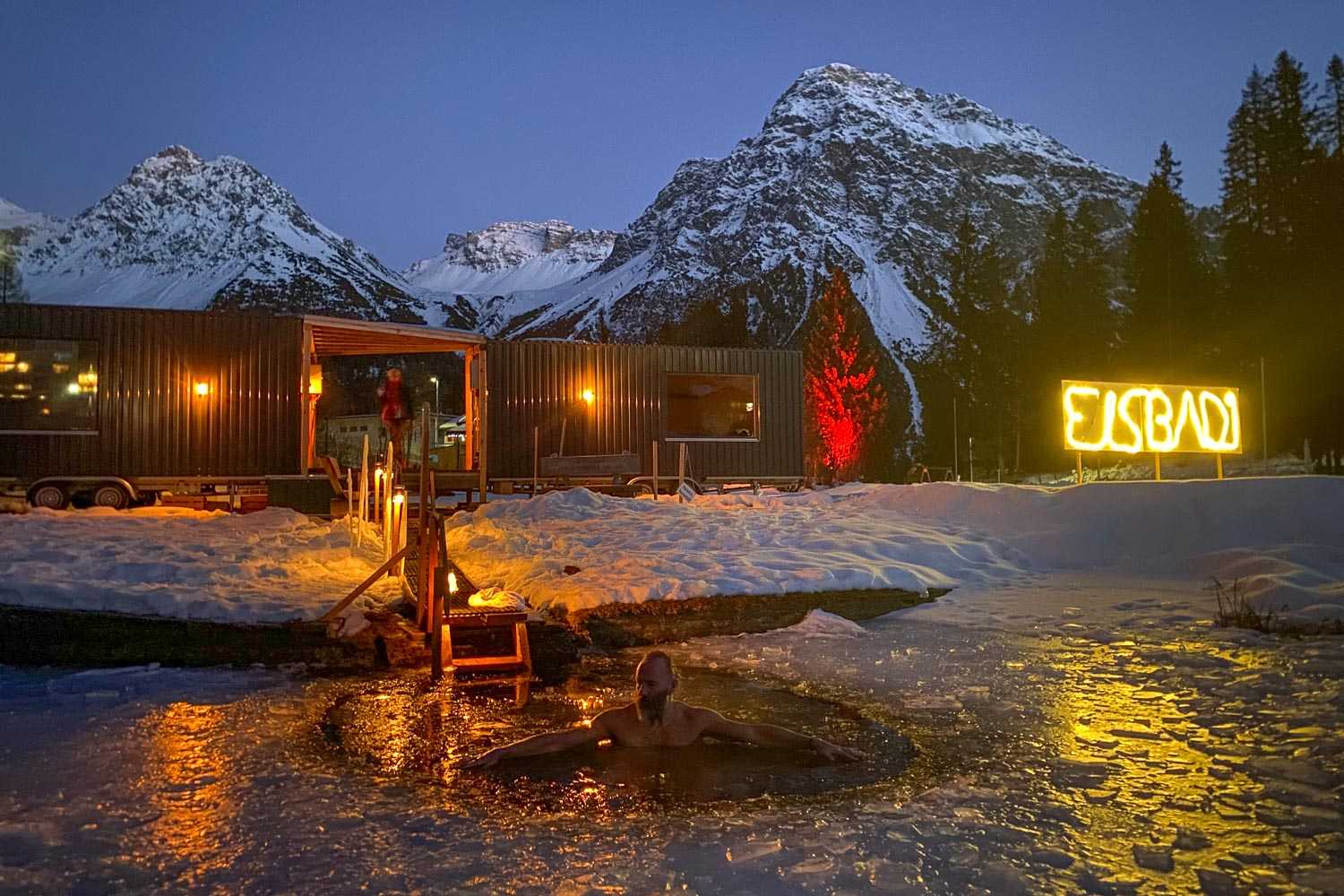
Ice bath at dusk (photo by Eisbadi Arosa)
The community at Untersee is a colourful mix: managers who relieve stress before starting work, pensioners who want to rejuvenate themselves, athletes who want to promote regeneration. Some come in groups, others enjoy the meditative silence of the early morning alone.
Ice bathing under a full moon is particularly popular.
“When the moon is above the mountains and reflected in the black water, it’s pure magic,” enthuses one night swimmer.
The silence, interrupted only by the occasional crackling of the ice, creates an almost mystical atmosphere.
“It’s a source of energy, inner strength”
We have no idea about proper breathing techniques
“There’s hardly anything that brings you more into the moment than jumping into the ice,” says Markus as we slowly warm up. “It’s a source of energy, inner strength – an inspiration for what lies within us.“
He emphasises how little we think about breathing properly. Although we do it 20,000 to 25,000 times a day, it is by far the most frequently used life-sustaining function in humans. We can survive up to three weeks without food, three days without water and three minutes without air. But we have no idea about proper breathing techniques.
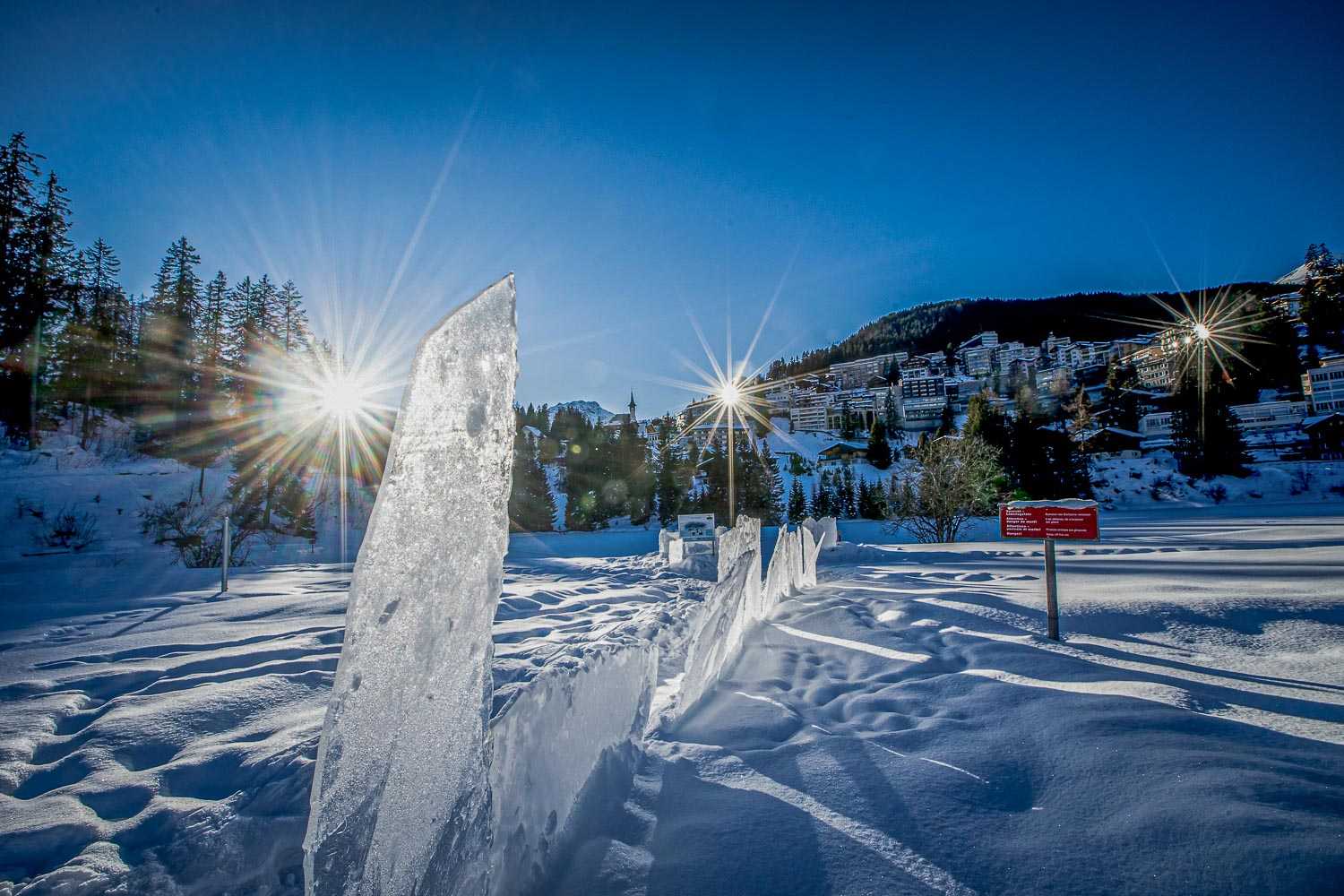
Every winter morning, the icy blanket is removed from the ice pool. The sculpture park of countless ice floes continues to grow day by day (photo by Eisbadi Arosa).
I see it the same way as Markus. Cold and breathing techniques train the body, mindset and perseverance and show that we can endure more than we think. That comfort is not everything. That growth lies in consciously confronting discomfort.
In a world full of distractions and constant sensory overload, ice water brings you radically into the present. Only the here and now counts – forced mindfulness.
An experience you will never forget
For Markus, such experiences are the basis for future adventures – the next Greenland crossing is coming up. For everyone else, an ice bath can at least teach humility in the face of nature and respect for one’s own limits. At the same time, it shows that these limits are often further than we assume.
In any case, it remains an experience you will never forget. The cold burns itself into your memory – and with it the feeling afterwards: the warmth that flows through your body, the clarity of mind – and the elation of having done it.
Read now:

The pearl of Africa
Uganda – Tree lions and monkey shows
26 Min.Where do you find something like this: Mountains growing out of the rainforest? Lions that climb trees? And gorilla visits! Uganda is a sensation. The ‘Pearl of Africa’ surprises with unimagined natural abundance, an enormous variety of animals and friendly people.
With scientists on board
Arctic photo gallery
< 1 Min.On board the ‘Resolute’, a comfortably equipped ship under the flag of the Royal Canadian Geographic Society, zoologists, ornithologists, oceanographers and glaciologists will conduct scientific surveys and counts over the next 10 days. And in the middle of it all, me, as a ‘temporary researcher’.
5 days 'inner fire'
Ice training with Wim Hof in Poland
< 1 Min.Sixty people from all over the world, including me, learn the fascinating effects of breathing, body exercises and ice baths in 5 days. Highlight: We boot up the Sniezka in shorts. My video summarises the experience.