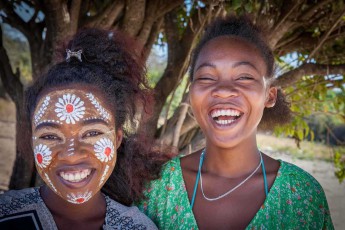
With her artfully applied traditional face painting of white floral patterns, 33-year-old Mboty beams alongside her cheerful daughter in Pigeon Bay - the ceremonial designs with flowers and geometric elements are part of Malagasy cultural tradition and are often worn for special occasions or festivals.
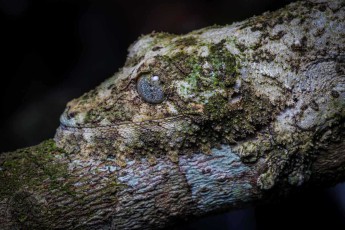
Perfectly adapted to the moss-covered tree bark, this leaf-tailed gecko (Uroplatus) is only recognisable by its blue eye - the nocturnal masters of camouflage are among the world's best-disguised reptiles and are found exclusively in Madagascar's rainforests.
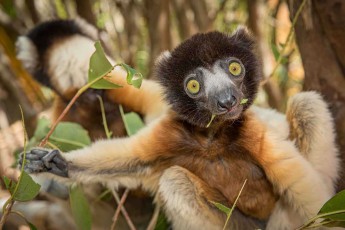
With green leaves between its teeth and irresistibly large yellow-green eyes, an enchantingly cute crowned sifaka chews its meal with relish – the touching way in which this critically endangered lemur holds the leaves with its dexterous little hands makes it one of the most likeable inhabitants of Lemur's Park for me.
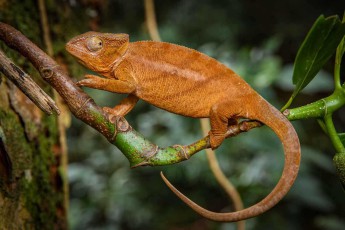
This is probably a female panther chameleon resting on a moss-covered branch in Montagne d'Ambre National Park. Its spiralled tail serves as a fifth hand for gripping the branches of the rainforest.
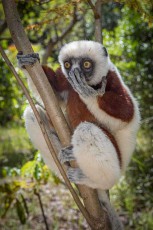
A Coquerel's sifaka seems to gaze into the rainforest in shock. Its silky soft, cream-coloured fur glistens in the dappled sunlight of Lemur's Park near Antananarivo. It effortlessly holds onto the branch with just three limbs.
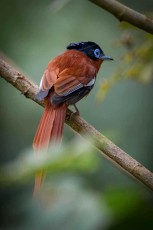
With its brilliant russet-brown plumage and elegant black head, a male Madagascar paradise flycatcher (Terpsiphone mutata) perches on a branch in Montagne d'Ambre National Park - this endemic species is known for its spectacular courtship flights and the males' long tail feathers.
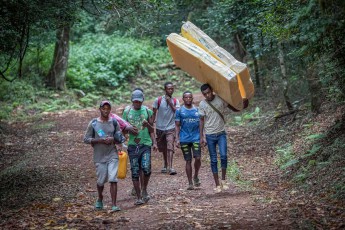
With heavy cargo on their heads, young men trek through the dense rainforests of the Amber Mountains.
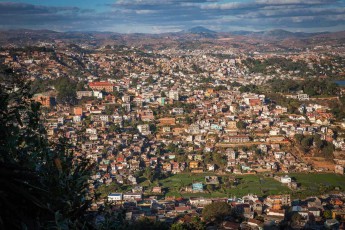
Like a colourful patchwork quilt, Antananarivo stretches to the horizon as seen from Analamanga Hill - the Malagasy capital with its three million inhabitants nestles into the gentle hills of the central highlands, where traditional brick houses and modern buildings spread between green rice terraces and wooded hilltops.
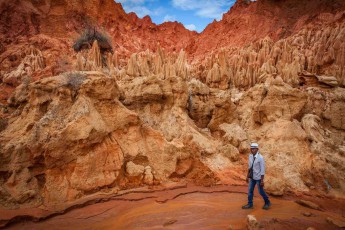
Our guide Christian walks along a stream bed of Tsingy Rouge. These bizarre rock formations of red laterite were created by erosion.
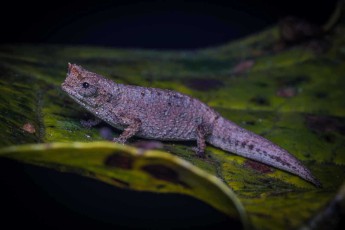
Like a tiny dragon, probably an Antakarana leaf chameleon (Brookesia antakarana) sits motionless on a leaf - this species, first described in 2005, is found exclusively in northern Madagascar's Amber Mountains and ranks among the world's smallest chameleons.
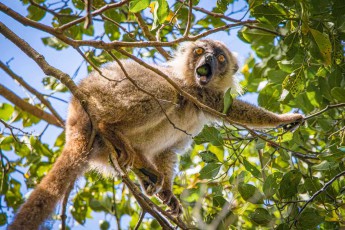
With mouth wide open, a Sanford's lemur (Eulemur sanfordi) utters its characteristic alarm call - this vocalisation serves to communicate with conspecifics and warns the group of potential dangers or marks territory in the canopies of Madagascar's rainforests.
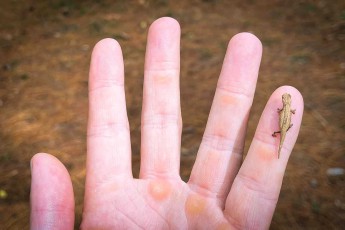
The most emotional moment of my trip to Madagascar: barely bigger than a thumbnail, a pygmy chameleon (Brookesia sp.) wiggles across my palm – with a body length of only 2–4 centimetres, they are among the smallest vertebrates in the world and are perfectly adapted to life in the leaf litter of mountain rainforests.
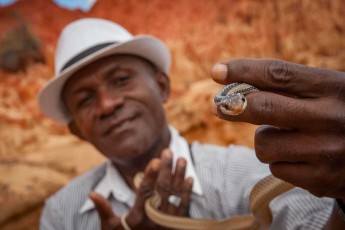
Guide Christian proudly presents a harmless cat-eyed snake (Madagascarophis sp.) - the nocturnal snakes with characteristic vertical pupils are one of Madagascar's most common snake species and are called "Marolambo" by locals, meaning "many in the hole".
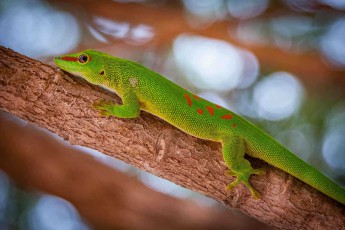
With its brilliant emerald-green scales and characteristic red spots, a Madagascar day gecko (Phelsuma sp.) basks on a branch - these colourful lizards are endemic to the island and feed mainly on nectar, pollen and small insects.
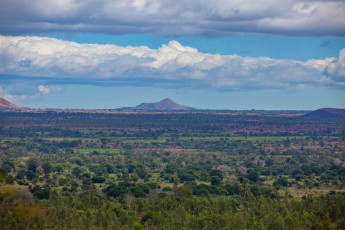
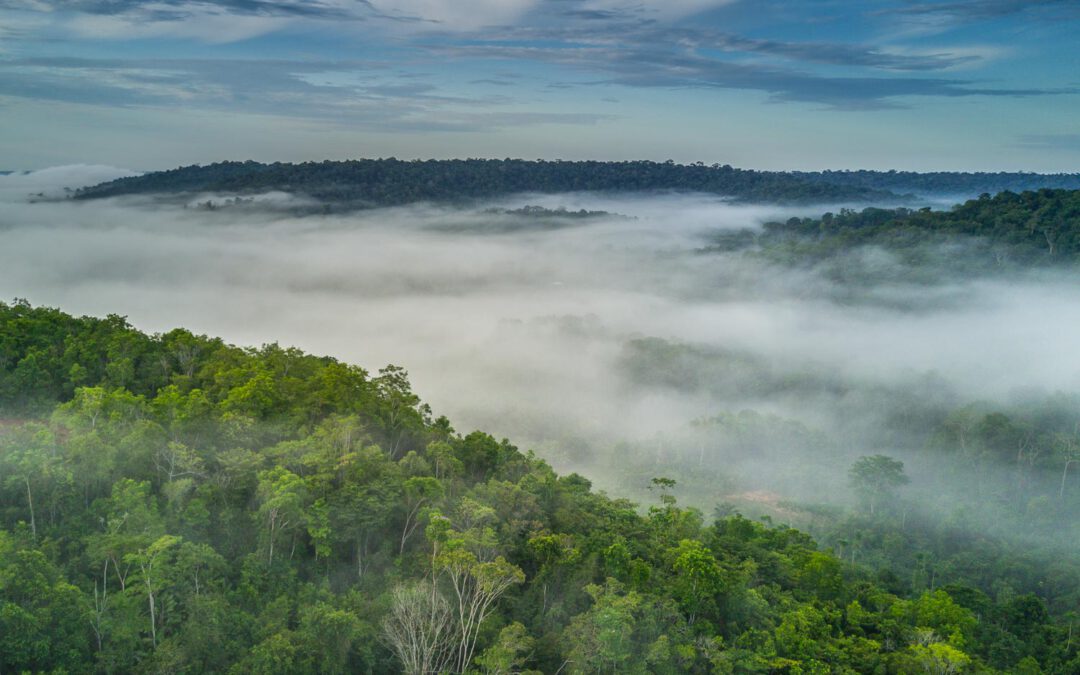
Like a green carpet, the mosaic-like landscape of northern Madagascar stretches to the horizon - between the dense rainforest islands and open savannas, a distinctive volcanic mountain rises.
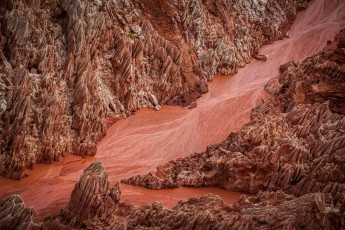
Like an alien lunar landscape, the sharp Tsingy needles stretch in spectacular ochre tones - between the limestone pinnacles reaching up to 100 metres high, iron oxide-rich sediments have deposited in brilliant reds, forming one of Earth's most bizarre karst landscapes.
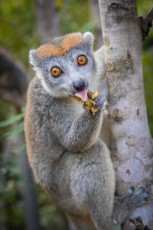
With pink tongue extended, a crowned lemur visibly enjoys a piece of banana - the characteristic orange "crown" and large amber eyes make this endangered species one of the most distinctive lemurs of Madagascar's dry forests, where it feeds mainly on fruits, leaves and nectar.
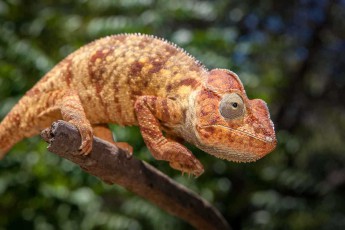
A female Parsons' chameleon (Calumma parsonii) displays warm golden tones at Diego Suarez. With its impressive head crest and characteristic bulging eyes, this species is one of the largest chameleons in the world and can change its body colour from green to orange to these spectacular copper tones depending on its mood and temperature.
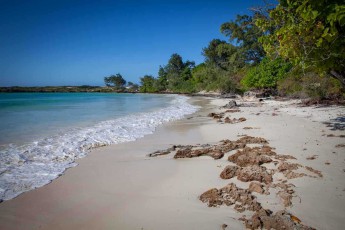
Untouched beach in the “Baie des pigeons”, Pigeon Bay, in northern Madagascar.
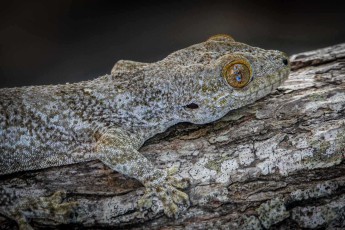
With its brilliant golden eye and perfect bark camouflage, a blends almost invisibly with the tree bark near Pigeon Bay - this nocturnal velvet gecko is endemic to Madagascar and ranks among the island's larger gecko species with its characteristic grey-brownish colouration.
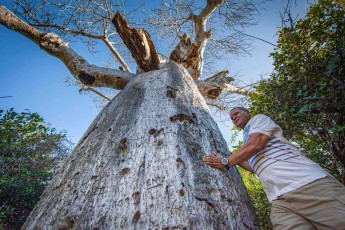
With reverent gaze, Jocelyn touches a majestic 400-year-old baobab tree - the mighty trunk of this "tree of life" can reach up to 25 metres in circumference and is considered sacred in Malagasy culture, as these arboreal giants have served as sources of water and nourishment for entire generations over centuries.
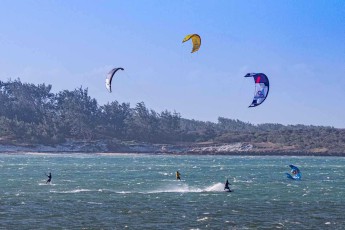
Like colourful butterflies, several kitesurfing canopies dance above the white-foamed waves of Sakalava Bay - the constant trade winds and sheltered location of this bay make it one of Madagascar's finest kitesurfing spots.
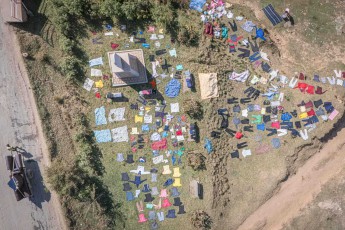
Like a colourful puzzle of textiles, an open-air laundry spreads out near Antananarivo - from the bird's-eye view, the traditional Malagasy method of drying clothes becomes a vibrant mosaic, with countless of garments neatly laid out on the meadow to dry in the tropical sun.
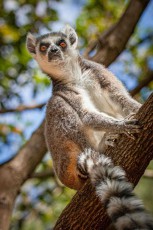
With its characteristic black-and-white ringed tail and brilliant orange eyes, a ring-tailed lemur sits relaxed in the fork of a branch - this iconic lemur species is Madagascar's emblem and captivates with its sociable behaviour in matriarchally organised groups of up to 30 animals.
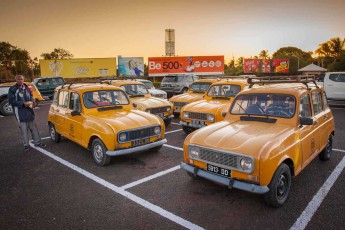
Nostalgic Renault R4 taxis line up like yellow pearls at Diego Suarez Airport. These robust French cult cars from the 1960s are known as ‘Taxi-Brousse’ and form the backbone of public transport on the island, where they have become living legends thanks to their reliability and ease of repair.